打架成本警示牌
Practitioners’ Insights: How did a decade of dedicated effort build China a self-reliant ‘digital track’?_我的网站

一 | 장애인 성폭력 발생 표준사업장...2년간 법 위반만 12건·과태료 5900만 원 대표이사 직장 내 성희롱 예방교육 미이수·최저임금 미지급 등 12건의 법 위반 적발 “장애인 표준사업장, 철저한 관리·감독과 장애인 고용 안정성 보장해야” 챗GPT를 활용해 제작[헤럴드경제=김용훈 기자] 장애인 고용을 위한 법정 요건을 갖춰 정부 인증과 재정 지원을 받는 ‘장애인 표준사업장’에서 지적장애 여성 근로자에 대한 성폭력 사건이 발생했다.해당 사업장은 최근 2년간 최저임금 미지급 등 12건의 노동관계법을 위반한 것으로 드러났다. 대표이사는 법정 의무교육인 직장 내 성희롱 예방교육조차 2년 연속 이수하지 않았다.26일 국회 행정안전위원회 소속 김예지 국민의힘 의원이 고용노동부로부터 제출받은 자료에 따르면 고용부는 인천 남동구의 한 장애인 표준사업장을 대상으로 특별근로감독을 실시해 총 12건의 법 위반을 적발했다.이 사업장에서는 지적장애 여성 근로자 A씨가 70대 남성인 전 임원 B씨로부터 장기간 성폭력을 당해 임신·출산에 이른 사건이 발생했다. B씨는 지난 19일 구속 송치됐다. 해당 사업장은 2024년 8월 5일 장애인 표준사업장 인증을 받았다.장애인 표준사업장은 일반 사업장에서 일자리를 얻기 어려운 장애인, 특히 중증장애인에게 안정적인 일자리를 제공하기 위해 도입된 제도다.장애인 근로자를 10명 이상 고용하고 전체 상시근로자의 30% 이상을 장애인으로 채워야 한다. 사업장 규모에 따라 중증장애인도 상시근로자의 5∼15% 이상 고용해야 한다.장애인 편의시설을 갖추고 장애인 근로자에게 최저임금 이상의 임금을 지급하는 것도 인증 요건이다. 표준사업장을 설립·운영하는 사업주는 작업시설과 편의시설 설치, 출퇴근용 차량 구입 등에 실제 투자액의 75%를 최대 10억원까지 무상으로 지원받을 수 있다. 일반 사업장보다 강화된 장애인 고용 의무와 정부 지원이 결합된 만큼 장애인 근로자의 인권과 노동조건을 보호할 책임도 크다.그러나 특별근로감독 결과 해당 사업장은 근로기준법 8건, 근로자퇴직급여보장법·남녀고용평등법·기간제법·최저임금법 각각 1건을 위반한 것으로 조사됐다. 이 가운데 최저임금과 퇴직금 미지급, 연장근로수당 과소 지급 등 6건은 사법처리 대상이 됐다.사업장은 올해 최저임금 인상 내용을 반영해 근로계약서를 갱신하지 않았고, 지난 1∼5월 배송 근로자 3명에게 최저임금 인상분을 지급하지 않았다.2025년도 연차유급휴가 미사용수당과 2024년 4월 퇴직한 근로자의 퇴직금도 지급하지 않은 것으로 나타났다. 2025년 5월부터 올해 6월까지 연장근로수당을 지급하면서 통상임금의 50%를 가산하지 않고 일정 금액만 지급한 사실도 적발됐다.행정처분 대상 위반에는 임금명세서 미교부와 연장수당 산정내역 미기재, 임금대장 필수사항 누락, 취업규칙 미신고 등이 포함됐다. 특히 대표이사는 2024년과 2025년 직장 내 성희롱 예방교육을 한 차례도 이수하지 않았다.부과된 과태료는 임금명세서 관련 위반 3050만원, 기간제 근로자의 근로조건 미명시 1750만원, 임금대장 기재사항 누락과 성희롱 예방교육 미실시 각각 500만원 등 총 5920만원이다.현재 전국 875개 장애인 표준사업장에서 장애인 1만9954명이 근무하고 있다. 이 가운데 지적장애인은 1만162명으로 전체의 50.9%를 차지한다. 장애인 학대와 성범죄 피해자 가운데 지적장애인이 차지하는 비중이 높은 만큼 표준사업장에 대한 사전 점검과 관리·감독을 강화해야 한다는 지적이 나온다.노동부는 사건 발생 이후 ‘장애인 표준사업장에 대한 지원업무 처리규칙’을 개정해 해당 사업장의 인증을 취소한다는 방침이다. 다만 인증 취소 과정에서 장애인 근로자들이 일자리를 잃지 않도록 다른 사업장으로의 고용 승계나 전직 지원 대책도 함께 마련해야 한다는 지적이다.김 의원은 “장애인이 안전하고 지속적으로 일할 수 있도록 마련된 표준사업장에서 오히려 이들의 취약성을 악용한 끔찍한 성폭력이 발생했다”며 “표준사업장 내 장애인 근로자의 인권 보장을 위한 철저한 관리·감독은 물론 사업장 인증이 취소되더라도 고용이 단절되지 않고 연계될 수 있도록 관련 법과 제도를 보완하겠다”고 말했다.。 Editor's Note:
Ahead of the opening of the 2026 World AI Conference and High-Level Meeting on Global AI Governance, Chinese AI start-up Moonshot AI released its Kimi K3 large language model. As the world's largest open-source model by parameter count to date, this launch marks a significant step forward in the development of China's artificial intelligence models.
From the C919 airliner soaring into the skies to Unitree's humanoid robots stealing the show; from DeepSeek pushing the AI frontier to Moonshot AI's landmark unveiling of Kimi K3 - China's wave of homegrown innovations has dominated global headlines in recent years, delivering a steady stream of breakthroughs.
At a meeting in Beijing that brought together the national science and technology award conference, the general assemblies of the members of the Chinese Academy of Sciences (CAS) and the Chinese Academy of Engineering (CAE), and the 11th national congress of the China Association for Science and Technology in July, Chinese President Xi Jinping, also general secretary of the Communist Party of China (CPC) Central Committee and chairman of the Central Military Commission, stressed that the 15th Five-Year Plan period (2026-2030) is a critical phase for tackling tough challenges in building up the country's strength in science and technology.
"We must seize the historic opportunity, rise to the challenges of the times, accelerate efforts to achieve high-level self-reliance and strength in science and technology, and make steady progress toward the 2035 goal of becoming a leading country in science and technology," he said.
In the article "Strive for Greater Strength and Self-Reliance in Science and Technology" included in the fourth volume of Xi Jinping: The Governance of China, Xi pointed out, "Through years of endeavor, our country's overall strength in science and technology has improved substantially. We therefore have a solid foundation, and are fully confident in our ability to seize the opportunities offered by the new revolution in science, technology and industry to achieve greater results." The article also mentioned that "We should participate to the full in global science and technology governance, contribute Chinese wisdom, and shape a philosophy of technology for good purposes, so that science and technology better serve human wellbeing, and enable China's science and technology industry to contribute more to building a global community of shared future."
In the 27th installment of the special series "Decoding the Book Xi Jinping: The Governance of China," the Global Times, along with the People's Daily Overseas Edition, continues to invite Chinese and foreign scholars, translators of Xi's works, practitioners with firsthand experience, and international readers to focus on the theme of striving for greater strength and self-reliance in science and technology. Together, they share views on China's tech growth, governance principles, and global cooperation in science and technology.
This is the 25th installment of "Practitioners' Insights." We turn our focus to a "digital track" laid for China's industrial internet: the Industrial Internet Identifier Resolution System. A decade ago, when a research team at the China Academy of Information and Communications Technology (CAICT) took on the task, the prevailing view in the industry was that it was "almost impossible." At that time, China had neither a strong voice in international standard-setting nor a deep technological foundation, yet it set out to build a self-reliant and controllable digital identity infrastructure spanning the entire industrial chain.
Today, the system's core indicators rank among the world's best, and its application scale is the largest globally. From dependence to autonomy, from "follower" to "pacesetter," the leap was made possible by the unwavering footsteps of Chinese researchers on the path toward high-level scientific and technological self-reliance and self-strengthening.
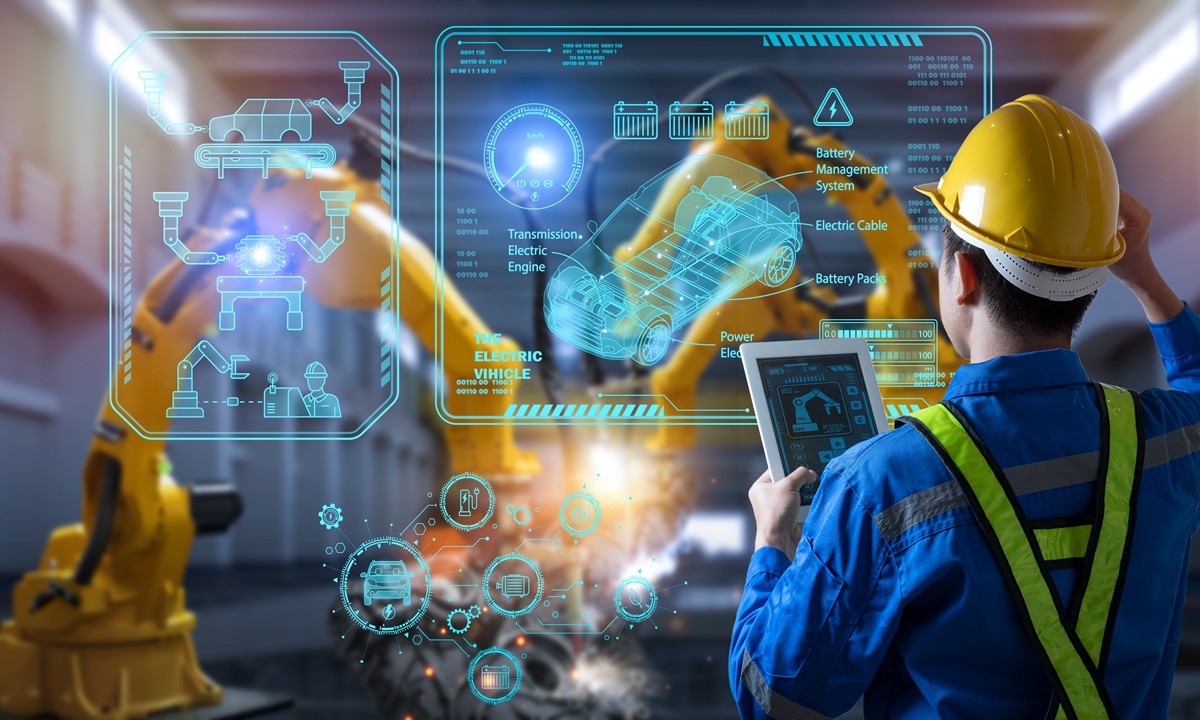
At daybreak, in an electric-vehicle factory, the assembly line was operating at full capacity. Each freshly produced power battery was assigned a special "ID" code. That code would stay with the battery as it entered storage, was loaded onto vehicles and hit the road, accompanying it through its entire lifecycle.
From the laboratory to the factory, this invisible data flow connects every stage of production, circulation, use and recycling across industries. And the underlying infrastructure making all of this possible is the "Industrial Internet Identifier Resolution System," which Liu and his colleagues helped build.
In simple terms, the system is like a "digital ID card plus navigation system" for the industrial world. In the real world, everyone has an identity card and every address has a street number; on the internet, every website has a domain name. Likewise, in the era of the industrial internet, every device, component, product and piece of data needs a unique, trustworthy and resolvable digital identity.
The Industrial Internet Identifier Resolution System is China's national-level digital infrastructure that supports the generation, query, circulation and management of those digital identities. Built and operated over nearly a decade under the leadership of CAICT, the system has become a fully self-reliant and controllable "digital track" serving China's industrial internet.
In the article "Build China into a Sci-Tech Powerhouse" included in Volume IV of Xi Jinping: The Governance of China, Chinese President Xi Jinping emphasized "increasing our country's strength and self-reliance in science and technology, and keeping us well-positioned in vital areas of science, technology and development."
Looking back on the decade-long campaign, Gao Qi, deputy chief engineer at CAICT's Industrial Internet and Internet of Things Research Institute, feels this especially deeply.
"As a critical piece of digital infrastructure, the Industrial Internet Identifier Resolution System is a vivid embodiment of this important principle in the field of industrial digitalization," Gao told the Global Times. What this system carries is precisely the historic mission of safeguarding the lifeline of China's digital industry, and achieving industrial self-reliance and controllability, he said.
Pioneering in uncharted territory
Fast-forward to 2015.
By then, Liu had only recently joined the CAICT. Before that, his work had focused mainly on developing software for internet domain-name resolution, so he already had a basic understanding of the underlying logic of "resolution." But when he was assigned to take part in planning and building China's Industrial Internet Identifier Resolution System, he knew immediately that this was something entirely different.
At the outset of the project, the most pressing challenge was a classic "chokepoint" problem. China gained full access to the global internet in 1994, which essentially meant the comprehensive adoption of technical protocols, industrial ecosystems and governance rules developed elsewhere. Building a Chinese-owned, independent and controllable identifier resolution system was not a matter of filling in a single missing technology. It meant creating an entire system from scratch. At the time, many in the industry believed the challenge was enormous, and some even said it was "practically impossible."
Why? Gao, one of the key strategic drivers behind the system, recalled that the challenge came on three levels.
First, China then lacked a voice in international standards and had little deep technical accumulation of its own, yet it was expected to build a system capable of covering the entire industrial chain and interoperating with dozens of heterogeneous systems. The technical difficulty was immense.
Second, in a landscape long reliant on foreign technologies, persuading tens of thousands of enterprises to adopt domestic identifiers was an enormous challenge in terms of industrial deployment and promotion. Many people dismissed the idea as sheer fantasy.
Third, with no clear expectation of return on investment, who would take responsibility for pushing the project forward and explore a sustainable operating model?
Gao said that from the project feasibility study stage, the team was thinking simultaneously about the technical roadmap, the system architecture and the industrial ecosystem as a closed loop. "We had to break through core technologies, but we also had to design a mechanism that would ensure companies would be willing to connect to the system and able to benefit from it," he recalled.
On the front line, Liu felt the pressure in a direct and concrete way. Time was tight, the mission was heavy and there was no ready-made experience to copy. Everything had to be researched and designed at the same time, developed and verified in parallel.
"There was also the pressure on the team," Liu told the Global Times. With the team under intense pressure, uncertainty in direction or repeated setbacks could easily cause anxiety among engineers. As both the leader of a development group and the person responsible for core module development, Liu had to solve technical problems while also keeping the team's pace steady.
The work was tense, but Liu felt calm and confident. "The project had already been thoroughly validated by experts and academicians in China, so the direction was clear. What we, as R&D personnel, needed to do was find a way to bring the design goals to life in the system," he said.
It was precisely this belief - the direction is clear, just keep moving forward - that sustained the team as it navigated uncharted territory step by step.
The road from zero to one is never smooth. Liu recalled a particularly tough test the team faced on the eve of deployment, just before the system was to go live. That day, testers suddenly reported a performance bottleneck. It was not a single-point failure; it was the kind of problem that rippled through the entire system, bringing many functions to a standstill. From morning until late at night, then from the early hours until daybreak, Liu and his teammates combed through the code line by line and tested again and again.
"As the launch drew near, it felt like the pressure had automatically spread to everyone," said Liu. "Everyone was staring intently at the system, and no one felt sleepy."
Finally, the problem was precisely identified and fixed. When the testers said the system had "passed," there were no cheers or high-fives. They simply exchanged glances and smiled. "That smile wasn't one of relief. It was the kind of smile that comes after winning a hard-fought battle," Liu told the Global Times. "I was really happy at that moment. Not just because the problem was solved and the system could go live, but because I confirmed something even more important: our team had cohesion. When it mattered most, we didn't fall apart. We could take on the toughest fights."
After countless days and nights, this group of Chinese engineers laid down a solid foundation for China's high-quality industrial development with technology and conviction. The "digital track" was finally in place.
Serve the industrial chain
In the "Build China into a Sci-Tech Powerhouse" included in Volume IV of Xi Jinping: The Governance of China, Xi noted that, "we should make solid efforts to promote the deep integration of sci-tech innovation and industrial innovation, and boost new quality productive forces."
On July 8, at a meeting that brought together the national science and technology award conference, the general assemblies of the members of the Chinese Academy of Sciences and the Chinese Academy of Engineering, and the 11th national congress of the China Association for Science and Technology, Xi further emphasized the need to promote the deep integration of sci-tech innovation with industrial innovation, opening up channels for accelerating the transformation of sci-tech achievements into real productive forces.
The value of technological innovation must ultimately be reflected in industry. From the very beginning, the Industrial Internet Identification and Resolution System was never designed to "publish papers." It was designed to address longstanding pain points in the development of the real economy.
According to Gao, enterprises have long faced three common challenges in the process of digital and intelligent transformation: data could not be found because different systems lacked a unified identity; data could not be connected because cross-company mutual recognition was absent; and data could not be put to good use because intelligent decision-making could not be formed. The Industrial Internet Identifier Resolution System was built precisely to tackle these three issues and provide foundational capabilities.
But for a new technology to truly integrate into industry, writing code in front of a computer is not enough. Over the past decade, Gao has led his team on repeated visits to key industries, pushing the system from "technically feasible" to "commercially usable." Liu and his colleagues have also visited many factory workshops and spoken face-to-face with business owners.
"Back in the office, what we saw were system metrics, interfaces, logs and data," Liu said. "But once we were on site, we saw individual parts, production lines and real business processes. It felt completely different."
During field research at enterprises, Liu and his coworkers witnessed firsthand how the system they had helped develop was enabling data connectivity across systems on production lines. They also learned that, in areas such as quality traceability, product management and supply-chain coordination, the system was helping companies reduce management costs and defect rates.
"At that moment, I felt that the identifiers were no longer just something on paper or on a platform - they were really being put to use. And once they start being used, they can go deeper and spread further," Liu recalled. As an R&D engineer, Liu said he felt proud to see companies using the system he had helped develop on the ground. "The late nights and the pressure we went through were all worth it."
Stories like this are countless in the system's rollout. In the new-energy vehicle sector, for example, unified identifiers give each battery pack a unique identity, allowing it to be "recognizable at all times and traceable throughout the chain." In high-end equipment manufacturing, data generated during the operation of large machinery is uploaded in real time through the system and analyzed to predict failure risks, enabling maintenance to be arranged in advance. In the pharmaceutical industry, identifiers make it possible to trace medicines through the entire process: from factory to pharmacy, every box can be verified.
Gao said that he is pleased to see more and more companies have shifted from "I have to use it" to "I want to use it." He told the Global Times the system not only helps enterprises cut costs and improve efficiency in practice, but more importantly, "some scenarios that used to rely on foreign identifier systems are now being gradually replaced by our independently controllable system."
From 'follower' to 'pacesetter'
A decade of dedicated work has yielded a remarkable harvest for China's Industrial Internet Identifier Resolution System.
The system now comprises 407 second-level nodes and more than 600,000 connected enterprises; the number of registered identities has surpassed 700 billion, with core indicators ranking among the world's best. The system has been deeply deployed across more than 40 industries, including automotive, electronics, pharmaceuticals and equipment manufacturing, and now covers every province on the Chinese mainland. Viewed globally, it has become one of the largest industrial internet identifier practices in terms of scale, the broadest in application and the most mature in industrial ecosystem.
Looking back on the past decade, Gao summed up the system's journey from "almost impossible" to global leadership as four key leaps.
The first was a strategic breakthrough, when the state explicitly incorporated the identity resolution system into its national strategy and completed the top-level design. The second was a technological breakthrough, marked by the independently designed national top-node architecture and advances in core protocols. The third was large-scale rollout, achieved through the innovative three-tier structure of national top nodes, second-level nodes and enterprise nodes. The fourth was value realization, as identities evolved from simply "enabling connectivity" to "creating value," with deep integration into blockchain, AI and other emerging technologies.
Each leap was driven not by chance, but by the coordinated advancement of technology, industry and ecosystem development. "We did not just build a system. We explored a China-specific path characterized by national strategic guidance, breakthroughs led by research institutions, industry leadership from enterprises and ecosystem co-construction across the industrial chain," Gao told the Global Times.
In Gao's view, the most essential "code" behind the building of this system is a steadfast commitment to greater self-reliance and strength in science and technology. "We did not simply copy foreign technologies. Instead, we focused on national strategic needs and pursued independent innovation, advancing basic research, key technological breakthroughs and industrial applications in parallel."
On July 8, at the meeting bringing together the national science and technology award conference, the general assemblies of the members of the Chinese Academy of Sciences and the Chinese Academy of Engineering, and the 11th national congress of the China Association for Science and Technology, Xi underscored that, "We must seize the historic opportunity, rise to the challenges of the times, accelerate efforts to achieve high-level self-reliance and strength in science and technology, and make steady progress toward the 2035 goal of becoming a leading country in science and technology."
In the field of the Industrial Internet Identifier Resolution System, China has, over the course of 10 years, transformed itself from a passive "follower" in global internet rules into a "pacesetter," completing the full journey from following, to running alongside, to leading in some areas.
Gao said the greatest significance of building this system lies not only in creating an independent infrastructure, but in forging a development path with Chinese characteristics. "Having our own identifier system means China can participate more proactively in global digital governance and contribute Chinese wisdom in new areas such as trusted identity, trusted data and intelligent interconnectivity, while providing a more solid technological foundation for building a community with a shared future in cyberspace."
On another ordinary evening at work, Liu's desk lamp was still on. He was fine-tuning a new data exchange protocol, while test results flickered continuously across his screen. Nights like this have long become routine for him.
Outside the window, the lights of the city were coming on one by one. Behind him, countless streams of data were flowing, being parsed and transmitted through the system - traces left by products across the global industrial chain, and the digital imprint of China's manufacturing sector as it moves toward high-quality development.
"I work on identity (system) for a day; I'll work on it for a lifetime." That is a phrase Liu often repeats. He says the road from "zero" to "one" has already been carved out; what matters now is to set out once again from "one." Beyond that road lies an even faster digital frontier.
。
Current article:http://noasluy.choumaimuwogenkuzhainuan.bond/aqk/ml5thc.pptx
Published on:01:24:59
 非你莫属
非你莫属 独立日
独立日 天地传说之鱼美人
 饭局的诱惑
饭局的诱惑 木棉花的春天
 我亲爱的小冤家
 川师大杀人案
 萌学园
萌学园


